Services
Plant construction abroad.
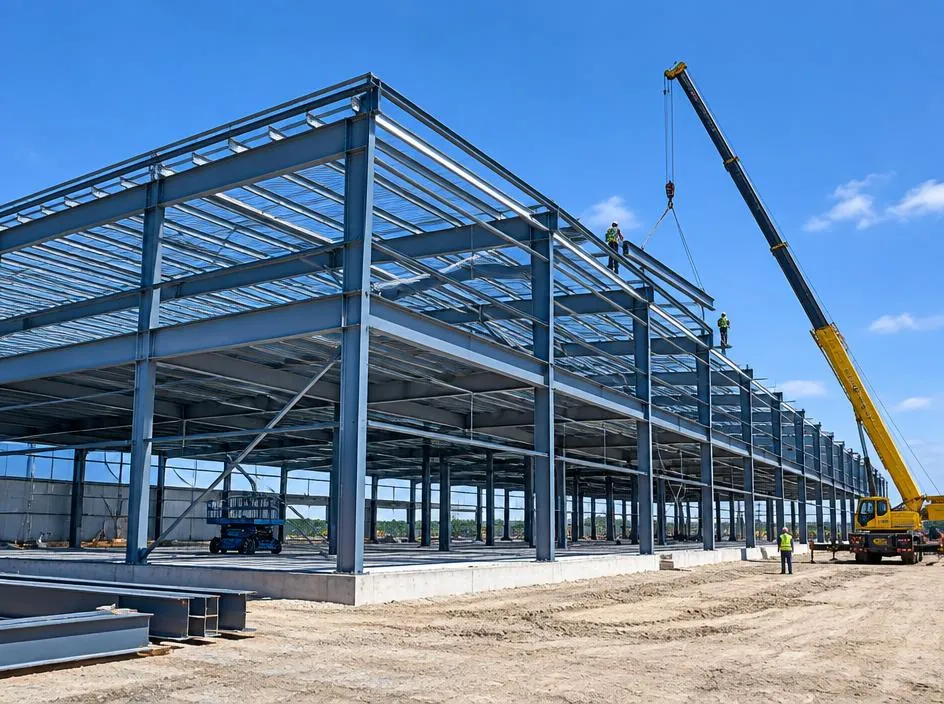
We plan, build and run new production sites – greenfield or brownfield – through to stable series production. From plants in Latin America, the US, Europe and Asia, we know which unknowns can derail a budget before they arise.
When plant construction abroad is on the agenda
- A market demands a presence with local manufacturing – as an extended workbench or as an independent company.
- Production has to move abroad for cost reasons.
- Customers expect just-in-time deliveries or smaller batch sizes close to the market.
- Your team has run plants but has never built one abroad. Building and running are two different experiences – you need both.
Typical mistakes in relocating and setting up plants abroad
What we take on
- 01
Site and feasibility analysis
Careful analysis of conditions in the target country: costs, labour market, supply chain, law and culture. Every detail counts here.
- 02
Business case and budget
A plan based on real conditions on site – not on the costs at the parent plant.
- 03
ISO-compliant organisation
Organization, processes and management system compliant with standards from day one, including quality management and KPI-based controlling.
- 04
Equipment and commissioning
Installation, acceptance and commissioning of equipment, infrastructure and production.
- 05
Team and leadership
Building local management and the workforce, integrating international expat teams.
- 06
Start-up and plant management
Ramp-up to series production and, if required, interim plant management until your local team takes over.
How a plant construction project works
- 01
Analysis
Goals, framework conditions and feasibility in the target country.
- 02
Concept
Site, layout, processes and business case.
- 03
Planning
Detailed project plan with Gantt chart and critical path.
- 04
Realization
Construction, installation and commissioning.
- 05
Ramp-up
Ramp-up to target performance.
- 06
Stabilisation
Optimization and handover to the local team.
The two most common mistakes in plant construction
- 1The business plan gets lost in the cost details of the home plant – and loses sight of the foreign location. Cost and revenue conditions rarely transfer one to one, and budgets get out of hand.
- 2Processes are planned from the status quo at the parent plant. Major deviations abroad are the rule rather than the exception.
An unknown worth one euro at home can quickly become 300,000 euros abroad. That is why an experienced country expert belongs in the planning phase.
Projects from practice
All case studies
Frequently asked questions
How long does it take to build a plant abroad?
In our projects, around 18 months passed between greenfield and stable series production – for the automotive supplier in Mexico as well as for the textile plant in Eastern Europe. The duration depends mainly on permits, equipment lead times and building up the local team.
Greenfield or brownfield – which is better?
A greenfield plant allows free planning of layout and organisation and the chance to establish an efficient structure from the start. A brownfield site saves time on buildings and permits but comes with existing structures. The decision is made in the site analysis based on schedule, budget and market.
Which mistakes should be avoided when building a plant?
The two most common: calculating a business plan based on the costs at your own plant, and planning processes from the status quo at the parent plant. Abroad, both rarely translate one to one.
How do you protect against budget overruns?
With an internationally experienced industrial practitioner who has already built and run several plants abroad – involved from the planning phase. He brings foreign-market scenarios into the plan while changes are still inexpensive.
Do you also take on plant management after start-up?
Yes. If required, we continue to run the plant on an interim basis until local management is trained and the KPIs are stable.
Let's talk about your project.
A first conversation clarifies the task, expectations, time frame and budget – openly and confidentially.